
Editorial: The Refuse That Refuses to Leave Ibadan: Consequences and the Causes of Waste Mismanagement
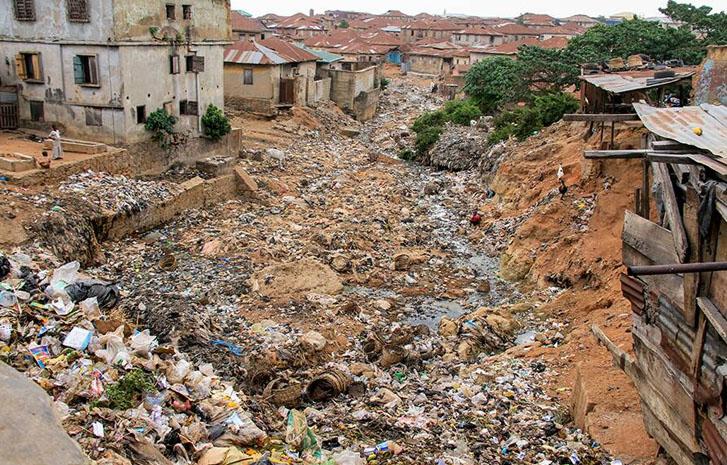
Once a condition moves away from the normal, then it becomes a disease. Offering solutions to it becomes a very important step to be taken. Ibadan, the capital city of the pacesetter state, is suffering from a disease. The manifestation of this disease has positioned resistance at the end of the rope, causing a decline in all areas and claiming the lives of Ibadan inhabitants. This abnormal condition has since progressed to its chronic stage, refusing to go yet its pathogenicity continues to get stronger with time. Waste mismanagement doesn’t need any further confirmatory diagnostic procedures to be pronounced as an abnormal condition battling Ibadan, a city with a vast land area and home to over 4 million inhabitants. In fact, the leadership of the state conceded this in a statement made in December 2025:
“Passing through Ibadan, you will see a lot of waste all over. It is a problem we have been dealing with. It has taken me six years, and it has still not been solved, but I promise you that the problem will be solved and solved for good.”— Governor Seyi Makinde

According to the World Bank, Nigeria currently generates at least 32 million tonnes of solid waste annually, and this number is projected to rise to 107 million tonnes by 2050. However, only 30% of the waste generated is efficiently collected and disposed of. (Earth.Org) This has been linked to the contribution of two-thirds of the country’s urban households in low-income neighbourhoods. The presentation of this in Ibadan across residential communities, markets, and roadsides is so conspicuous that it couldn’t escape detection even by a myopic eye.
The concerns about these wastes go beyond their inappropriate presence on major roads. The danger it poses to economic growth, healthy living, property security, and life security makes it imperative to take decisive action and seek lasting solutions. Its effect has caused many to suffer health challenges, while those whose lives have been lost through it leave an unforgettable mark on the heart of concerned citizens. These wastes can cause harm both within and outside the vicinity where they’re dropped.
One of the dangers of this reckless act can be seriously expressed during rainy seasons. Severally, agencies such as the National Emergency Management Agency (NEMA) warn traders and residents of how plastic and solid wastes dumped indiscriminately often find their way into drainage channels during rainfall. This clogs water pathways, preventing natural runoff and causing water to accumulate rapidly in residential and commercial areas. The consequences of this are numerous. Affected individuals often lose their hard-earned properties and investments. In a Daily Post Nigeria report (dated July 23, 2023) and The Guardian Nigeria report (dated July 25, 2023), both have reported a victim of flooding, Alhaja Alimot Adeleke, who has been the breadwinner of her family since the demise of her husband, to have appealed to well meaning Nigerians to assist her due to her loss of bags of garri, cassava flour and other foodstuffs as a result of a flood. “Where do I start from, everything is gone. Please help me; I am finished,” Alimot Adeleke cried out.

The consequence can be even costlier as it has claimed several lives. Ibadan’s flood history is severe and well-documented. Reports show that the 31 August 1980 flood alone claimed over 200 lives and displaced 50,000 people, and the 26 August 2011 flood killed about 120 people and destroyed property worth tens of billions of naira.
Communities with heaps of refuse, open defecation, clogged water pathways, and other areas with poor sanitation practices serve as breeding grounds for vectors, such as mosquitoes, flies, and rodents. This increases the risk of infections, consequently leading to diseases such as cholera and Lassa fever, transmitted by infected houseflies and rats, respectively. Infected mosquitoes can transmit Malaria, Dengue fever, yellow fever, Chikungunya, and Zika virus disease.
The worst side of this is that the consequences are far-reaching, as other areas outside the locality can be put into danger. When rain falls on these heaps of refuse, the runoff carries contaminants as it flows into wells, boreholes, and streams that households still depend on for drinking, cooking, and washing, especially those in rural or low-income areas. Consumption of these contaminated water sources exposes residents to several pathogens such as Vibrio cholerae (causes Cholera) and Salmonella spp. (causes Typhoid fever), Leptospira interrogans (causes Leptospirosis), among others. This generally reduces productivity and the quality of life in the affected areas.
Beyond these, other consequences include economic growth retardation as it discourages tourism and investment, as well as reducing the yield from wildlife and aquatic ecosystems.
What are the roots of this (aetiology of the disease)?
The causes are hiding in plain sight. In fact, they’ve been in existence before the problem surfaced. Although they might be commonly attributed to rapid population growth, this is only trying to leave what we have control over, which is the true cause, for that which is just a coincidence, yet our control over it is limited. The causes are a result of laxity from both the government and the citizens. Despite actions taken by the government, which are not unnoticed, their share of this is so large that ignoring them is costly. The government’s share of this is evident in their weak governance, poor planning, inadequate infrastructure, and limited access to affordable disposal facilities. Findings show that weak enforcement of environmental regulations, inadequate waste infrastructure, and insufficient evacuation trucks greatly fuel waste mismanagement. These are duties of the government not yet fully addressed. The government is vested with the authority to make laws, enforce them, and the power to sanction defiance. If those who flout the law continue to roam freely without facing any consequences, it’s a clear indication of a failure of the authorities charged with enforcing it, and it all boils down to weak governance.
Citizens (the governed) also contribute significantly to this waste management crisis. A July 2026 Vanguard report describes refuse heaps as a common sight across major roads, markets and residential communities such as Bodija, Ojoo, Beere, Challenge, Gate, Dugbe, Apata and Orita-Challenge (Vanguard News), and this is as a result of citizens’ indiscriminate dumping of refuse on roadsides, in open spaces, and into drainage channels and water bodies. Many households fail to use designated collection services or dispose of waste at approved sites, due to poor sanitation practices and lack of environmental consciousness. Open defecation is another major way citizens contribute. In fact, millions of Nigerians have been shown by findings to be practising this.

Other causes that are intertwined and may not be singly attributed to any of the governments or citizens include economic hardship, lack of proper orientation, inadequate public toilet facilities, among others. Some households can’t afford the cost of subscription to approved waste collection services due to financial constraints. These can be due to a system failure, when the authorities fail to provide the basic amenities, provide effective orientation, make proper disposal facilities accessible and affordable to all, including those in remote areas, and can be due to citizens’ laxity or negligence, when they fail to work on themselves, such as by poisoning themselves for proper enlightenment, and efforts to fight poverty.
It’s time we got rid of this menace (let’s get the disease treated!)
The foremost way to tackle this is for all concerned parties, whether from the authorities or from the governed, to fulfil their responsibilities and correct the lapses on their respective ends. Ibadan can get rid of this mess when citizens improve their attitude towards environmental sanitation, abstain from and shun disposal of refuse along roadsides, drainage channels and open spaces. Also, there must be effective, close supervision of waste management by those in charge, such as the Oyo State Ministry of Environment and Natural Resources, working alongside the Oyo State Waste Management Authority (OYOWMA) and accredited Private Sector Participants (PSPs). The government should come up with effective strategies to overcome economic hardship and make facilities, such as sufficient evacuation trucks, adequate public toilet facilities, and approved waste collection services, available and affordable to all.
We know the disease, and the causes are not hidden. This solves the problem halfway and makes getting rid of it easier. Everyone should play their roles in correcting their errors as it applies to them. Ibadan is suffering from a disease in need of therapy. The doctors it needs do not necessarily have to hold a degree in Medicine nor in Surgery. No, they don’t necessarily need to have undergone training in any medical school. All they need is to be a law-abiding, patriotic, environmentally conscious, informed, disciplined, socially responsible individual who supports the progress and well-being of this blessed city and nation. Ibadan refuse’s refusal to leave is not a result of reluctance of the refuse, but as a result of Ibadan residents’ inertia towards making corrections.
alfaaedahpress
Al-Faaedah is the flagship journal of MSSN Akinyele Area Council, promoting authentic Islamic scholarship, moral leadership, student mentorship, and societal development.
Did you find this reflection beneficial?
Your feedback guides our editorial board on future essays and dispatches.
Reader Discussion (3)
A deeply insightful exploration. The balance between academic discipline and spiritual consciousness is precisely what our student body needs today.
Barakallahu feek Brother Ahmad. May Allah grant our youth steadfastness in learning and practice.
Jazakumullahu Khayran to the editorial team. The references from Surah Taha were especially grounding.
Related Perspectives & Notes

Editorial: UI Advises 226 to Withdraw: The 5.0 System—or a Deeper Failure We Refuse to Address?
Recently, the University of Ibadan’s advice of withdrawal to 226 students has made the headlines. The students advised to withdraw span 100 to 500 levels across...
Editorial: UI Advises 226 to Withdraw: The 5.0 System—or a Deeper Failure We Refuse to Address?
Recently, the University of Ibadan’s advice of withdrawal to 226 students has made the headlines. The students advised to withdraw span 100 to 500 levels across...