
Editorial: UI Advises 226 to Withdraw: The 5.0 System—or a Deeper Failure We Refuse to Address?
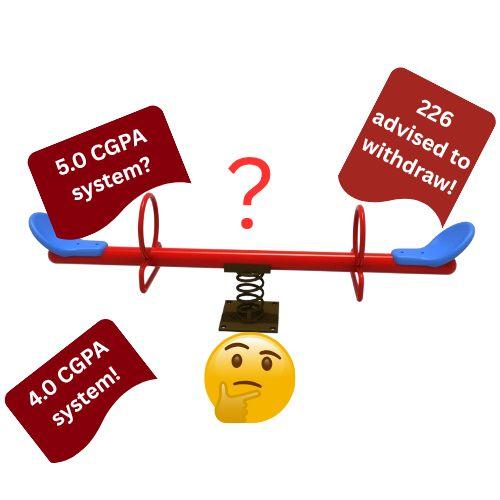

Recently, the University of Ibadan’s advice of withdrawal to 226 students has made the headlines. The students advised to withdraw span 100 to 500 levels across the faculties. This is made known to the public following the ratification of the results of the 2024/2025 session for graduating and non-graduating students by the Senate of the university in a meeting on Monday, March 2, 2026. The coincidence of the massive withdrawal with the university’s new implementation of the 5.0 CGPA system makes it a topic of interest requiring a keen look to make informed decisions. Is the new 5.0 CGPA system the cause of this or another factor we might be overlooking?
To look into this even more critically, let’s have a quick dive into a similar case of the institution in 2018. In 2018, the Senate of the University of Ibadan approved the withdrawal of 408 students from the university owing to poor academic performance and failure to meet the minimum requirements. The fact that it was reported that three-quarters of the withdrawn students were those admitted during the 2015/2016 academic session brings us closer to getting the cause of this massive withdrawal.
What does the 2015/2016 session have to do with the 2018 massive withdrawal? Although the 2015/2016 session was when the institution transitioned from the 7.0. CGPA system into the 4.0 CGPA system, which is not linked to the 2018 massive withdrawal. 2016 was when the Federal Government ordered that entry examinations, such as Post-UTME, usually organised by universities in Nigeria for admission seekers after the Unified Tertiary Matriculation Examinations should be scrapped. This admission of candidates under the “no screening” banner has been linked to the 2018 massive withdrawal, as candidates with high UTME scores were among those who couldn’t meet the institution’s minimum requirement.
Post-UTME screening has proved to be a credible admission criterion, as it’s believed that after assessing candidates with the Post-UTME exam, the university system will only be left with students who are qualified to be in universities and who have the intelligence to withstand the rigours of academic work. But why the recurrence of a similarly massive withdrawal despite students being screened through the proven Post-UTME before their admission? Can we then say it’s surely because of the change in the CGPA system? We can only tie the cause of this year’s massive withdrawal to a change in the CGPA system if those who experienced the change are those who have been introduced to a particular CGPA system initially, and this, in the case of these students, is obviously not. Logically, the effect of a change in condition on something can be tested if and only if it experiences both conditions. Apparently, the transition from the 4.0 CGPA system to a 5.0 CGPA system can be ruled out as the cause of this poor performance.
If other opinions state otherwise, can we truly afford to ignore the impact social media and a lack of proper orientation have on these students’ performance? The common trends noticed among students nowadays is to bring out their mobile phone, switch on their camera, make videos with them, and post it across their social media accounts (TikTok most especially) to inform their fans that they’re on their way to the lecture room, instead of revising what they learnt in the previous lecture or even preparing their mind for the new information they’re going to receive in the lecture. What a misplaced priority!
Students are more interested in contributing to social media trends than they are in contributing to intellectual discussions in class. Recently, we’ve noticed how swift it is for responses to be given to tweets or any other posts, but the complete opposite is the case when it comes to responding to open questions in lecture rooms. Tweets find it easy to gain thousands of comments in seconds while questions raised in lecture rooms struggle to see five willing responders in minutes.
This “social media addiction syndrome” can be linked to the second factor this piece is establishing: lack of proper orientation. If you engage these students, you’ll understand how uninformed they are regarding their coursework. Some students are victims, not because they’re not sound academically, but because they lack certain information that is crucial to excel. Some students are more interested in updating the version of their social media applications than they are in updating their knowledge. They are more interested in being updated about the social media trends than they are when it comes to being informed about their coursework, projects, and other academic-related matters
It’s a pity that students now open different accounts across different platforms more than they join academic bodies.
It’s high time students learnt from the past, abstained from irrelevant social media participation, and set their priorities right. If students would commit fully to their education, directing their energy toward what truly matters while decisively cutting off the distractions of social media, the transformation narrative of underperformance would surely be rewritten. The problem at times—in fact, most times—is not lack of brilliance but a lack of discipline, which is expressed as divided attention and misplaced priorities. If this can be corrected, students’ performance will surge like a river flooding with such a tide ready to overflow any obstacle.
alfaaedahpress
Al-Faaedah is the flagship journal of MSSN Akinyele Area Council, promoting authentic Islamic scholarship, moral leadership, student mentorship, and societal development.
Did you find this reflection beneficial?
Your feedback guides our editorial board on future essays and dispatches.
Reader Discussion (3)
A deeply insightful exploration. The balance between academic discipline and spiritual consciousness is precisely what our student body needs today.
Barakallahu feek Brother Ahmad. May Allah grant our youth steadfastness in learning and practice.
Jazakumullahu Khayran to the editorial team. The references from Surah Taha were especially grounding.
Related Perspectives & Notes
Editorial: The Refuse That Refuses to Leave Ibadan: Consequences and the Causes of Waste Mismanagement
“Where do I start from, everything is gone. Please help me; I am finished,” Alimot Adeleke cried out.

Editorial: UI Advises 226 to Withdraw: The 5.0 System—or a Deeper Failure We Refuse to Address?
Recently, the University of Ibadan’s advice of withdrawal to 226 students has made the headlines. The students advised to withdraw span 100 to 500 levels across...