
INTERVIEW: “Before Extramural, I could hardly score 20 out of 60 in Physics…” — Maryam Oketunde

In this interview, Maryam Oketunde, one of the trailblazers of the MSSN Akinyele Area Council’s Extramural Tutorial Center, shared with us her strategies, preparation tips, and how she achieved an outstanding result in the 2025 UTME. Whether you’re a current or an aspiring UTME candidate, this interview contains inspiration, practical advice, and real-life insights to guide you on your journey to academic excellence.

Kindly introduce yourself (Full Name, State of Origin, and brief academic background).
I am Maryam Oketunde from Oyo State. I have been one of the top students in my class since primary school and graduated as the overall best student of my secondary school.
What was your UTME score?
324 (I had equal scores of 86 in Physics and Chemistry)
Have you gained admission?
Yes
State your institution and course of study.
Doctor of Pharmacy at the University of Ibadan
At what academic level were you before joining the MSSN Akinyele Extramural Class?
I was in SS3 when I started Extramural. I attended SSCE classes for WAEC preparation. I struggled especially with Physics and Chemistry, and at some point, I had lost hope in understanding them. My reading culture was inconsistent, but I always had in mind that I did not want to write any exam twice. Thanks to the “DOS”es and tutors then, I began to improve.
How did the Extramural classes influence your academic performance and exam readiness?
Extramural classes influenced my academic performance from the very first week. For example, when Dos Toyyib taught Circular Motion—a topic I could not understand previously—I was able to solve most past questions on it after practising. Spiritual diets (SPDs) in both academic and JAMB classes also greatly influenced my readiness and performance. May Allah continue to bless them.
Can you describe the difference between your academic level before and after the Extramural program?
The difference is huge. Before Extramural, I could hardly score 20 out of 60 in Physics, Chemistry, and Biology in past questions. After practising questions on each topic taught, I improved to 40+ out of 60 consistently. Most questions became familiar, significantly improving my performance.
Beyond academics, how did the Extramural impact your spiritual life and personal discipline?
The Extramural program had a significant impact on my spiritual and personal life. It allowed me to grow in faith through spiritual discussions and engagement with like-minded peers. I learned the importance of consistency in daily routines, personal discipline, time management, and balancing both spiritual and academic life. Extramural reminded me that success is not just about knowledge, but also about strong moral values and discipline in every aspect of life.
How long did you prepare for the UTME, and what was your daily or weekly study routine like?
I started serious preparation when I obtained my JAMB form, about 60–65 days before the exam. I studied day and night, waking up for Tahajjud, solving past questions, taking mocks, noting questions I got wrong, seeking guidance from those who knew, and reviewing concepts from textbooks. I focused on time management, practising my limits to build speed and accuracy.
What study techniques or strategies contributed most to your high score?
Taking mock exams and joining active brainstorming groups. I also used online mocks on QuizzerWeb, Quizboot, and apps like Exam Scholars, 3Thirty, and MySchool App. Practising and controversial questions helped me become familiar with the JAMB style. Extramural CBT mocks also significantly improved my score.
What major challenges did you face during preparation, and how did you overcome them?
The main challenge was not understanding the questions while solving them. I overcame this by reaching out to our doses. Dos Abdulbasit Olayinka, Head of Doses, patiently explained difficult Physics questions and ensured I understood them. May Allah continue to bless him.
In your opinion, what would you say was the key factor behind your high performance?
God—without Him, nothing is achievable. I prayed every time I felt discomfort during preparation, seeking to avoid rewriting the exam.
What advice would you give to students preparing for the upcoming UTME?
Have a positive mindset, put your trust in Allah, and believe in yourself. Do not assume you must write UTME multiple times to gain admission. Work hard—UTME success is not luck; prayer and effort pay off.
What message would you share with future participants of the MSSN Akinyele Extramural program?
Embrace the experience wholeheartedly. The program offers spiritual and intellectual growth. Take every session as an opportunity to learn, be diligent, and support one another. The bonds formed here will last a lifetime, and the lessons will guide you far beyond the program.
Is there any final message you would like to share with aspiring UTME candidates?
Success does not solely depend on knowledge, but on perseverance and effort. Stay focused, be consistent, avoid distractions, and trust the process. Preparation, dedication, and prayer will guide you to success. Manage your time wisely during the exam and give your best.
Editor’s Note: This interview has been lightly edited for grammar and clarity while preserving the interviewee’s original meaning.
alfaaedahpress
Al-Faaedah is the flagship journal of MSSN Akinyele Area Council, promoting authentic Islamic scholarship, moral leadership, student mentorship, and societal development.
Did you find this reflection beneficial?
Your feedback guides our editorial board on future essays and dispatches.
Reader Discussion (3)
A deeply insightful exploration. The balance between academic discipline and spiritual consciousness is precisely what our student body needs today.
Barakallahu feek Brother Ahmad. May Allah grant our youth steadfastness in learning and practice.
Jazakumullahu Khayran to the editorial team. The references from Surah Taha were especially grounding.
Related Perspectives & Notes
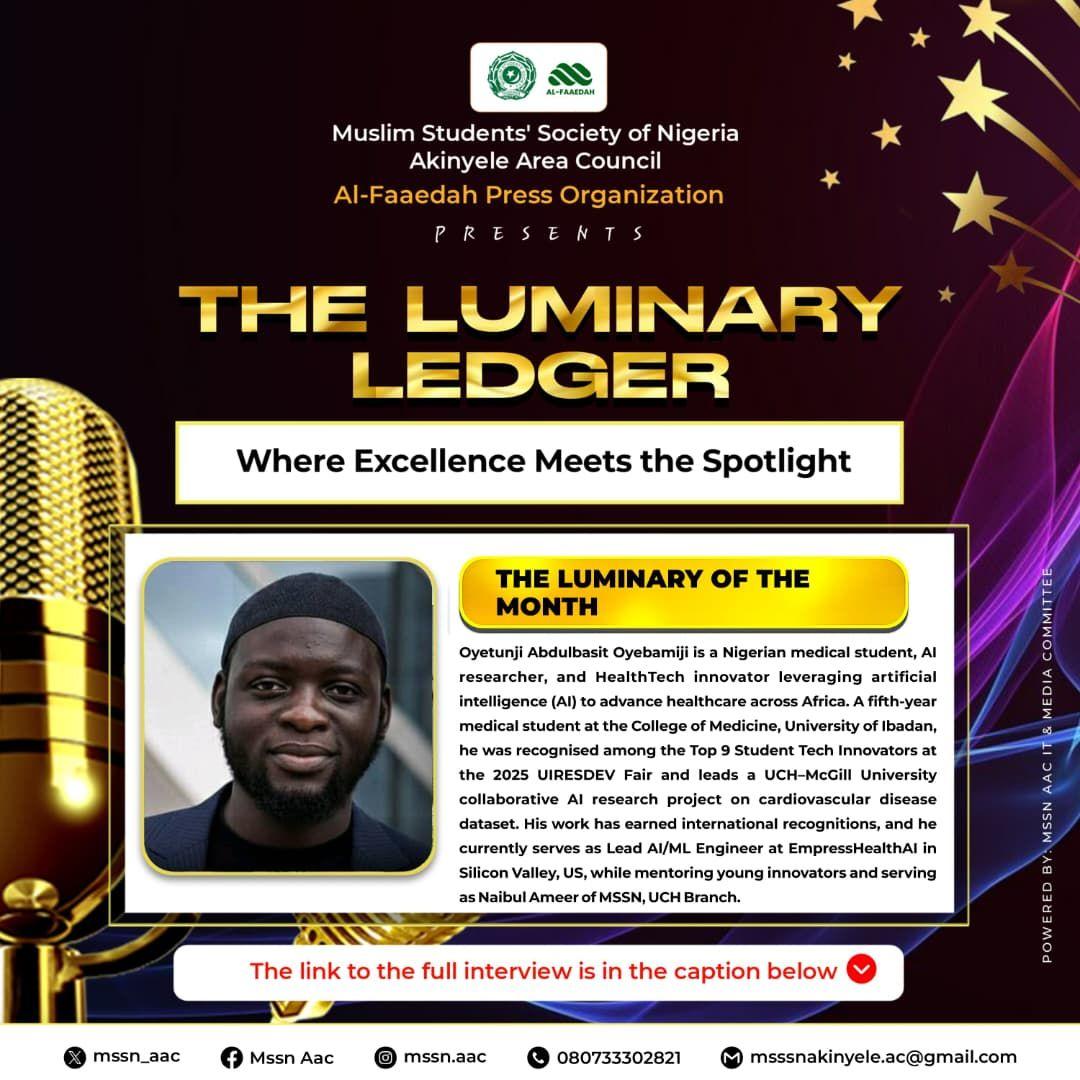
"Medical School Is a Very Jealous Speciality": Abdulbasit on Thriving with Marrying Ibadan Medicine and Artificial Intelligence
In this insightful interview, Oyetunji Abdulbasit Oyebamiji—a fifth-year medical student at the University of Ibadan, AI researcher, HealthTech innovator, and L...

INTERVIEW: “I prepared for my UTME examination for 3 months, and I read for about 5 to 6 hours daily.” — Hammed Maryam Titilayo
In this interview, Hammed Maryam Titilayo, one of the trailblazers of the MSSN Akinyele Area Council's Extramural Tutorial Center, shared with us her strategies...